
Restore Safe Road Surfaces Without Full Reconstruction
Roadway Asphalt Leveling in Milo for uneven pavement that creates hazards and accelerates vehicle wear
Statewide Foam and Coatings provides roadway asphalt leveling to municipalities, commercial property managers, and private access road owners who need to correct surface depressions, settlement zones, and dangerous unevenness without the time and expense of full road replacement. When a section of pavement drops several inches or develops a pronounced dip, drivers feel the impact through their steering wheel, drainage systems fail to move water off the surface, and the risk of vehicle damage or accidents increases with every pass.
This service uses advanced geotechnical foam injection to fill voids beneath the asphalt, lifting the settled sections back to their original grade and restoring a smooth, continuous surface. The foam expands beneath the pavement, compresses weak soil layers, and locks the structure in place without tearing up the roadbed or rerouting traffic for weeks. In Maine, where freeze-thaw cycles open subsurface voids and wash out base materials, this approach addresses the root cause of settlement rather than patching over visible symptoms.
If you manage roads or large paved areas in Milo and need to eliminate safety hazards while keeping lanes open, reach out to discuss how foam leveling applies to your site.
How Foam Injection Stabilizes Settled Pavement
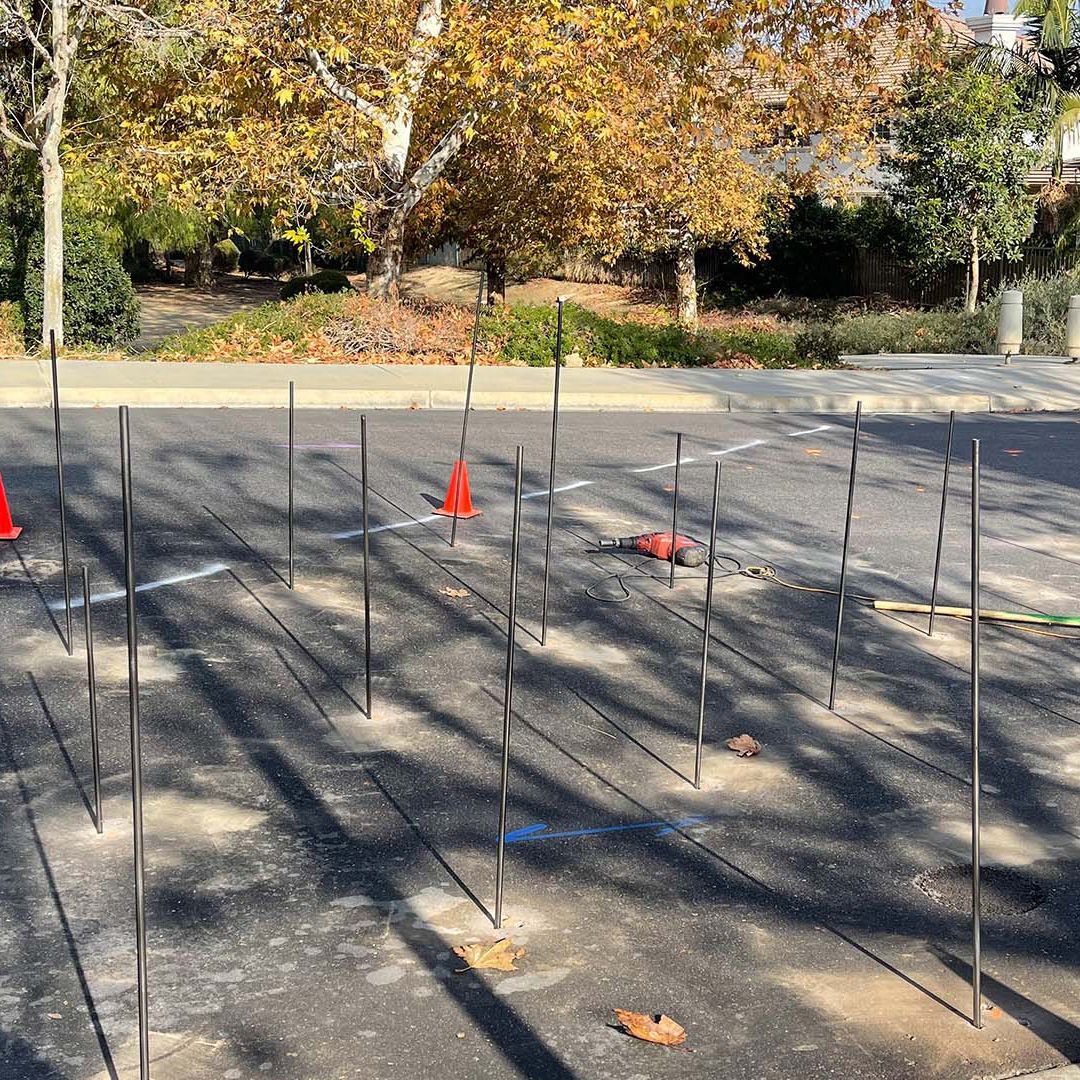
The crew drills small access holes through the asphalt at calculated intervals, inserts injection ports, and pumps high-density polyurethane foam into the voids beneath the surface. You watch the sunken area rise in real time as the foam fills gaps, compacts loose soil, and pushes the pavement upward. Once the slab reaches the target elevation, the ports are removed, the holes are sealed with hot rubberized material, and the road is ready for traffic within hours.
After the work is complete, you drive over a surface that no longer drops away under your tires, water flows toward catch basins instead of pooling in low spots, and the edge of the settled zone no longer acts as a trip hazard for maintenance crews on foot. Statewide Foam and Coatings monitors the lift with laser levels and adjusts injection volumes to match the structural load and soil conditions at each location.
The process does not require milling, base replacement, or hot mix paving equipment. It works on roads that are still structurally sound but have settled due to erosion, poor compaction during initial construction, or subsurface water movement. It does not repair pavement that is heavily cracked, alligatored, or at the end of its surface life.
Questions About Lifting Settled Road Sections
Property managers and municipal officials often ask how foam leveling compares to traditional methods and what results they can expect on their roads.
What causes asphalt to settle in the first place?
Water infiltrates the base layer through cracks or poor edge sealing, washes out fine particles, and leaves voids that allow the pavement above to drop into the unsupported space.
How long does the road need to stay closed during the work?
Most projects allow one lane to remain open while the crew works in the other, and treated sections can carry vehicle loads within two to four hours after foam injection.
Why does foam work better than mud jacking for asphalt roads?
Polyurethane foam weighs less than cementitious slurry, exerts more controlled lift pressure, and cures faster, which matters when you need to reopen a road quickly without adding load to already compromised soils.
What happens if the road settles again after treatment?
If the foam application addressed the void and compacted the surrounding soil properly, re-settlement is uncommon unless a new water source opens or adjacent sections begin to fail.
When should you choose full reconstruction instead of foam leveling?
If the pavement surface is severely deteriorated, the base has failed across a wide area, or the road needs a complete thickness upgrade, replacement is the more durable option.
Statewide Foam and Coatings works with road crews and facility managers throughout Milo to evaluate site conditions, determine whether foam leveling will deliver the necessary results, and schedule the work to minimize disruption. Call (207) 949-2557 to review your road sections and discuss a leveling plan that restores safe driving surfaces without the lead time and cost of reconstruction.