
Reinforce Failing Seawalls Before Structural Collapse
Seawall Stabilization in Milo for waterfront structures showing signs of void formation, tilting, or cracking that threaten property and shoreline integrity
Statewide Foam and Coatings provides seawall stabilization to waterfront property owners, municipal harbor authorities, and coastal facility managers who need to stop the progressive failure of retaining walls, bulkheads, and armored shorelines before they collapse into the water. When wave action, tidal movement, or poor drainage washes soil out from behind a seawall, the structure loses support, leans toward the water, develops wide cracks, and eventually gives way under the weight of the land it was built to hold.
This service uses high-density geotechnical foam to fill the voids that form behind and beneath the seawall, restoring the load-bearing capacity of the backfill and locking the structure back into stable contact with the soil. The foam is injected through small ports drilled into the cap or face of the wall, expands to fill open spaces, and hardens into a water-resistant mass that will not wash away with the next storm. In coastal Maine, where freeze-thaw cycles, nor'easters, and storm surge accelerate erosion and void formation, this method prevents catastrophic failure without dismantling and rebuilding the entire wall.
If you own or manage waterfront property in Milo and see signs that your seawall is losing stability, reach out to discuss stabilization options that address the subsurface problems driving the damage.
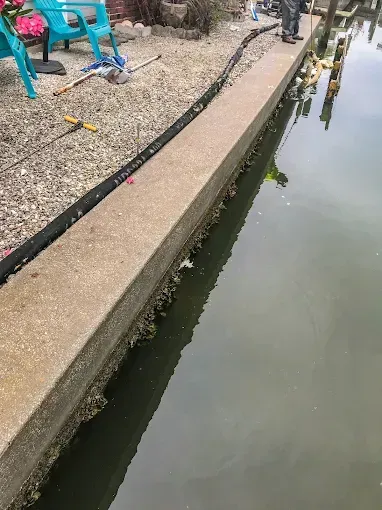
How Foam Injection Restores Seawall Support
The crew drills access holes through the top or face of the seawall at intervals determined by the size and location of the voids, inserts injection hoses, and pumps polyurethane foam into the empty spaces. You watch the wall shift slightly as the foam fills the gaps and pushes the structure back toward its original position. The foam cures within minutes, forming a rigid support mass that will not compress, rot, or dissolve in saltwater.
After stabilization is complete, the seawall no longer leans, cracks stop widening, and the soil on the landward side remains in place instead of slumping toward the water. Statewide Foam and Coatings uses real-time monitoring during injection to control the volume and pressure of the foam, ensuring that the wall is supported without being overloaded or displaced.
The process works on concrete, stone, timber, and steel seawalls where the structural elements are still intact but the backfill has been lost. It does not repair walls that have broken apart, rusted through, or shifted so far out of position that they require disassembly and reconstruction. The crew evaluates the wall's condition and the extent of void formation before recommending foam stabilization.
Questions Property Owners Ask About Seawall Work
Waterfront property owners often want to understand what causes seawall failure and how foam stabilization compares to other repair methods.
What causes voids to form behind a seawall?
Water flowing through cracks, gaps at the base, or poorly designed weep holes erodes the backfill over time, carrying soil particles out into the water and leaving empty spaces that allow the wall to tilt and crack.
How do you know when a seawall needs stabilization instead of replacement?
If the wall itself is structurally sound but has lost support due to soil loss, foam injection can restore stability at a fraction of the cost and time required to tear out and rebuild the structure.
Why is geotechnical foam better than trucking in new backfill?
Foam flows into spaces that are impossible to reach with heavy equipment, hardens quickly, and will not settle or wash away, whereas loose fill can erode again if the same drainage issues persist.
What will you notice after the seawall is stabilized?
The wall will stop moving, cracks will no longer widen, and the ground behind the wall will remain level instead of sinking toward the shoreline.
When should you consider rebuilding instead of stabilizing?
If the wall has broken into sections, the foundation has failed, or the structure has shifted so far that it no longer provides effective erosion control, replacement is the more reliable long-term solution.
Statewide Foam and Coatings works with waterfront property owners and municipalities throughout Milo to assess seawall condition, identify void locations, and complete stabilization work that protects both the structure and the property it supports. Call (207) 949-2557 to schedule an evaluation and discuss how foam injection can extend the life of your seawall.